
How to Play Magic: The Gathering
How you win, what's on your side of the table, how a turn goes and how to read a card, plus the cheapest way to get your first deck.
By We Geek Together4 min read
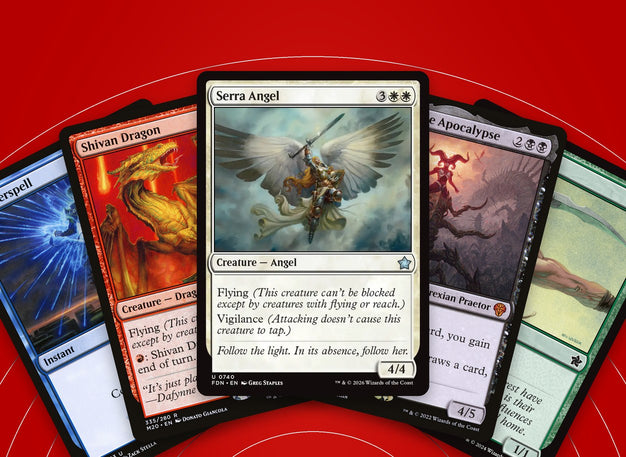
Magic: The Gathering has been around since 1993, and it has a reputation for being hard to learn. The basics fit on a page, though. Here's how a game works, how to read a card, and the cheapest way to get a deck in your hands.
How you win
Each player starts at 20 life. You attack with creatures and cast spells to bring the other player down to 0. A player loses when any one of these happens:
- Their life total is 0 or less.
- They have to draw a card and their library is empty.
- They have ten or more poison counters. Only a few cards give poison counters, so you won't see this often.
Commander is different: everyone starts at 40 and there are a few extra rules. Here's how the formats differ.
Your side of the table

- Library: your deck, face down. You draw from the top.
- Hand: the cards you've drawn and haven't played yet.
- Battlefield: your lands, creatures and other permanents. They stay there until something removes them.
- Graveyard: your discard pile. Instants and sorceries go here once they've done their thing, and so do creatures that are destroyed.
- Exile: a holding area for cards that some spells remove. Most of them never come back.
Lands are how you pay for everything. You tap a land, turning it sideways, to get one mana. It untaps at the start of your next turn.
Starting the game
Shuffle your deck and draw seven cards. If you don't like your hand, you can take a mulligan: shuffle it back, draw a new seven, then put one card on the bottom of your library for each mulligan you've taken. A hand with two to five lands is usually worth keeping.
In a two-player game, the player who goes first skips their draw on the first turn.
Your turn
- Untap everything you control.
- Draw a card.
- Main phase. Play up to one land. Cast creatures and other spells by tapping lands for the mana.
- Combat. Choose which of your creatures attack. Attacking taps them. The other player chooses which of their creatures block. Each creature deals damage equal to its power, and a creature that takes damage equal to its toughness or more is destroyed. Attackers that aren't blocked deal their damage to the player.
- Second main phase. Play a land or cast spells, if you didn't before combat.
- End of turn. If you have more than seven cards in hand, discard down to seven. Damage on creatures wears off.
Two rules catch most new players. A creature can't attack on the turn it comes into play, because it hasn't been under your control since your turn began. And instants are the exception to "only on your turn": you can cast them any time you could act, including during the other player's turn.
Reading a card
Every Magic card is laid out the same way. Here are the parts of this Serra Angel that you'll find on almost every creature.

Keywords like flying and vigilance are shorthand. On many cards, especially commons, the meaning is printed right after the keyword in italics.
Formats, briefly
The cards are the same everywhere. A format decides which cards you can use, how big your deck is and how many people play. Most players at our stores play Commander, a four-player format with 100-card decks. Standard uses only recent sets. Draft and sealed have you build a deck from packs you open at the event. Our formats guide covers all of them.
Building a deck
- At least 60 cards for Standard and the other constructed formats, and no more than four copies of any card except basic lands. Up to 15 more cards can sit in a sideboard to swap in between games.
- About 24 lands in a 60-card deck. New players almost always want to cut lands for more spells. Don't.
- Two colors is the easiest place to start. Each extra color makes it harder to have the right land at the right time.
- Mostly cheap spells. Most of your cards should cost two, three or four mana, so you have something to do every turn.
A sealed or draft deck is 40 cards with about 17 lands. Our sealed guide walks through one. For Commander, start with the 10-10-10 rule.
Getting your first deck
The easiest way in is our themed repacks. Each one is 20 cards we picked by hand around one color and one theme, like Elves, Goblins, Zombies, Pirates or Flyers: 8 basic lands, 7 commons, 3 uncommons, a rare or mythic and a wildcard. Any two shuffled together make a 40-card deck you can play that night. Here's how to pick a pair and make the deck better as you go.
- Singles are the cheapest way to improve a deck once you know what you want. Our singles page has filters for color, card type, format and what a card does, and here's what the condition labels mean.
- Our plain MTG Repack is 50 different cards with 5 rares, in no particular color or theme. It's a cheap way to build a collection to pull from.
Where to play
Sandy, Wednesdays, 4 to 6 pm: New Player Night, for people who are learning the game. Casual Commander starts at 5 if you want to stay.
Provo, Wednesdays, 4 to 7 pm: Casual Magic. Bring a deck or borrow one from the store's library. It's free.
Both stores also have Commander nights, Provo runs a draft on Friday nights, and Tuesday in Provo is competitive Commander. Here's every Magic night at our stores. Times shift around prereleases and holidays, so check the events page before you come in.
Rules as of the Comprehensive Rules dated November 6, 2026. Wizards of the Coast updates them with most new sets.
Card images from Scryfall.
Keep reading
All stories Board Games
 for Fans of the 2026 Game of the Year Nominees
A tabletop gift for fans of each 2026 Game Awards Game of the Year nominee: GTA VI, Resident Evil Requiem, 007 First Light, Control Resonant, Phantom Blade Zero and Ocarina of Time. All in...
 Guides
Planeswalker: Netflix's Magic: The Gathering Show, and How to Start Playing
What we know about Planeswalker, Netflix's animated Magic: The Gathering series coming in 2027, what a planeswalker is, and the quickest way to start playing the card game in Provo or Sandy.
 Commander
Dune Commanders in Magic: The Eight New Legends
Paul Atreides, Muad'Dib, Chani, the Baron and the other Dune legendary creatures coming to Magic: what's confirmed about each, and how to get a Dune Commander deck ready now.
The singles
Now flip through the whole binder.
7663 cards in stock. Search by name or filter by color, type, format and what the card does.
Browse the singlesMagic: The Gathering, its card images and mana symbols are trademarks and copyrights of Wizards of the Coast LLC. We Geek Together is an independent game store and is not affiliated with Wizards of the Coast.